The Latency Ledger
Packets of DNA vs. Packets of Data

The Desk and the Relay
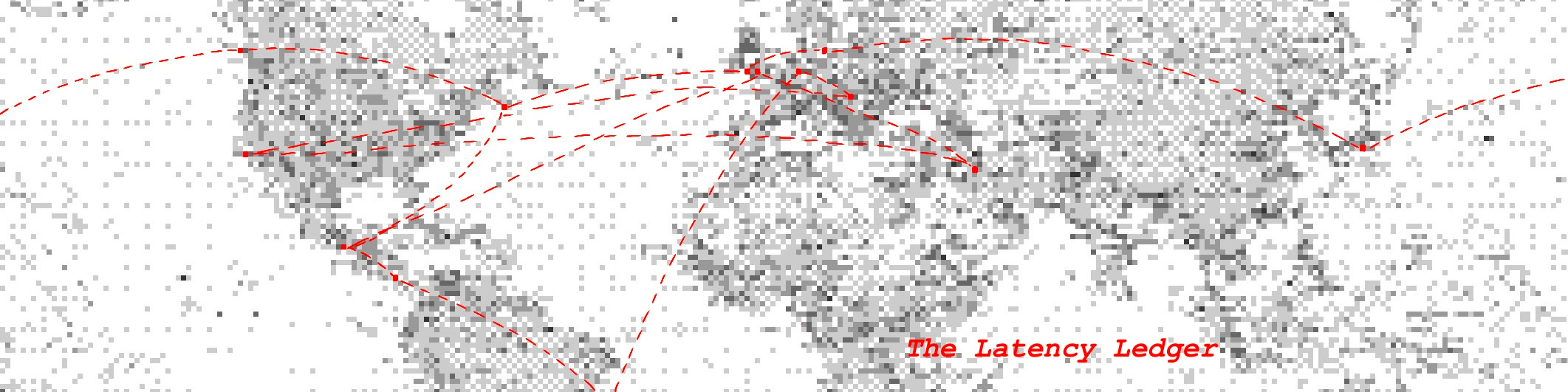
I’m writing this from The Postmaster’s Desk in Oakland, California. On my screen is a dithered, monochrome map vibrating with 12 red pixels: a digital ghost of a physical reality I’m co-creating with a dozen analog-leaning artist friends I made in Web3 over the past five years.
This is the beginning of an experiment supported by an Art on Tezos: Beyond grant. Twelve artists, spanning five continents, are now linked in a circular, analog mail-art relay. By March 5th, twelve distinct pieces of correspondence will set out simultaneously from their respective desks, beginning their slow, high-friction journey toward one another. I will be introducing each of these nodes in detail as the Ledger unfolds.
This exercise is, by definition, experimental. While I’ve been instrumental in choosing the coordinates, the true themes of this project will arise as the mail moves, stumbles, and eventually—fingers crossed—arrives.
The Fiction of Immutability
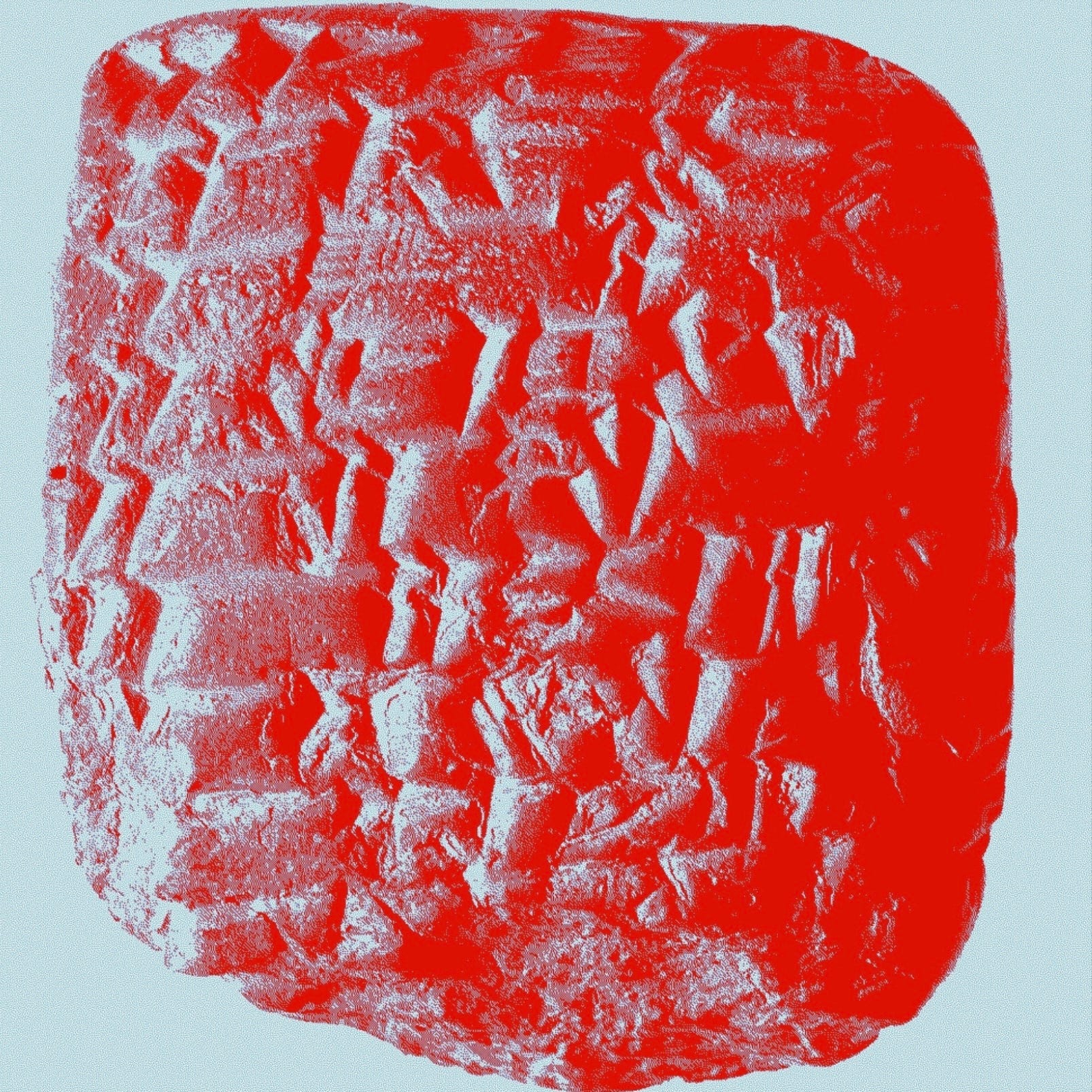
We’re told the blockchain is forever, yet we live in an era of digital evaporation. We have ancient Egyptian papyri and countless Sumerian clay tablets that have survived millennia, but I can no longer play a VHS tape from 1999 or find some of the first NFTs I minted in 2021.
Immutability is often a fiction. The permanent digital record is only as stable as the servers and interfaces that host it. In this light, a hand-addressed envelope, buffered by the latency of the physical world, may well be more resistant to time than a centralized cloud server.
The Performance of Decentralization
The current discourse around decentralization often frames it as a purely technical fix to remedy the concentration of power: a way to flatten the world through code. But as artist Simon Denny and others have noted, removing a central hub doesn’t dissolve hierarchy; it often just makes the invisible points of gravity harder to see. When we are feeling disempowered, decentralization is an especially seductive story we tell about agency.
The Latency Ledger sits directly in the center of this tension. On one hand, we have the digital ledger: a transparent, high-speed coordination technology designed to scale trust across a network. On the other, we have analog latency: the stubborn, localized, and hyper-situated reality of a physical object moving through time and space.
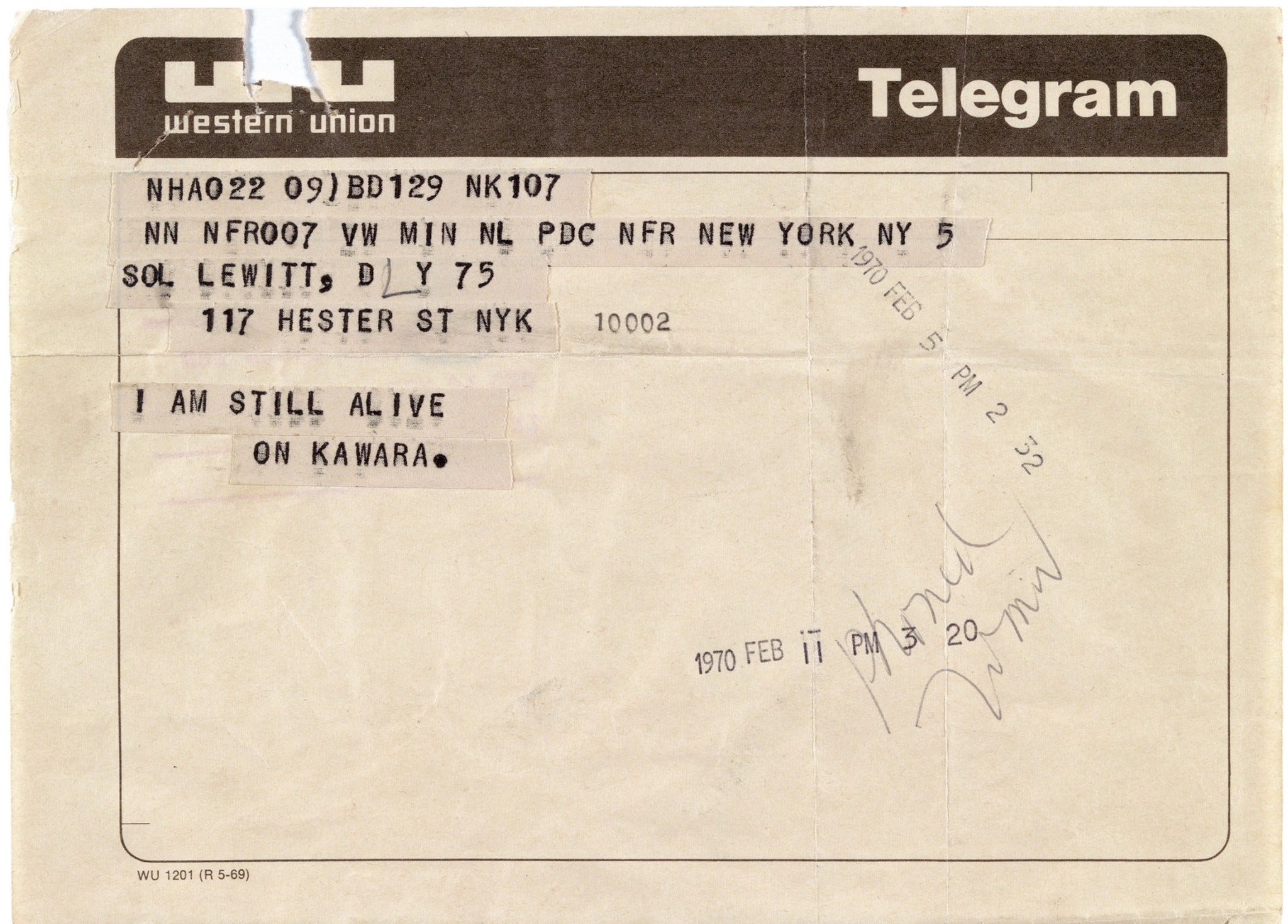
By calling myself the Postmaster, I’m making the invisible center visible. I’m acknowledging that for a decentralized network to function, there must be an anchor of collective responsibility: a Postmaster’s Desk where the coordination begins. We aren’t trying to escape the center; we are making the centers—all 12 of them—legible. Not unlike On Kawara reminding his friends “I Am Still Alive,” we are establishing that “I Am Here,” at a specific node, absorbing the risks and the labor of the relay.
The Ledger as Witness
If the digital world is fragile and the physical world is slow, what is the blockchain actually good for?
In this project, the Tezos blockchain is our L1 Witness. It’s the ledger that documents the transit, the documentation of the physical exchanges of twelve artists in conversation with each other. The gift of Web3 isn’t just the tech of course; it’s how it has allowed us to find our people across the globe. The very existence of the blockchain, regardless of a market place, is the fabric of this global conversation.
By documenting this tactile, fragile ephemera in an on-chain catalog, we can finally relax. If a packet is lost in a sorting facility in Brussels or caught in a storm over the Pacific, the record remains. The L1 (The Ledger) and the L2 (The Interactive Archive documented as a project catalog minted on blockchain) ensure that even if a physical object vanishes, the social tissue of the exchange is preserved.
Mail-Art as Resistance
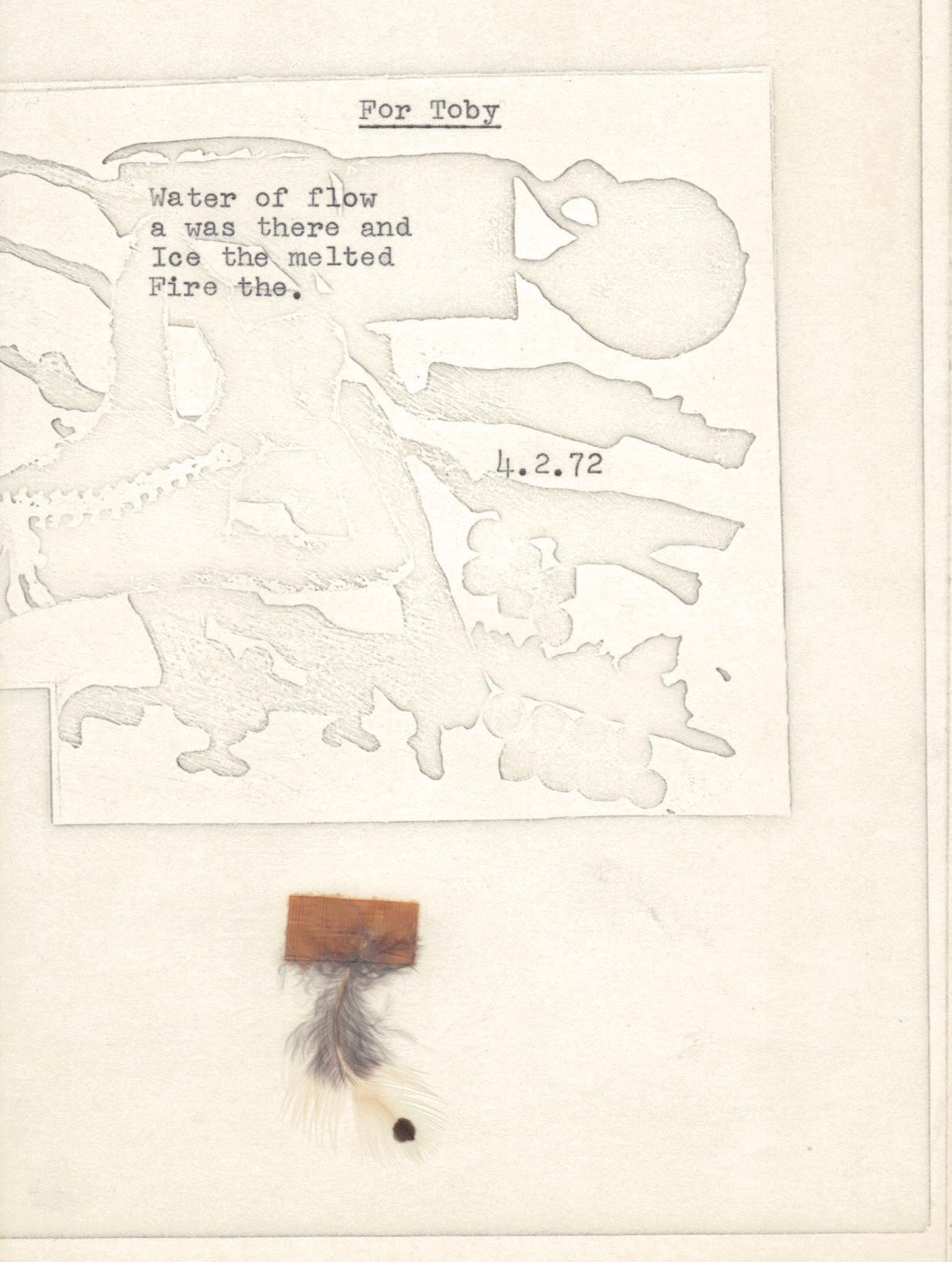
Mail-art is the ultimate old-school networked art, and today, it feels like an act of sociocultural resistance. In an age of data-scraping and algorithmic surveillance, the mailbox remains a truly private node. If the grid goes down, or if we are cancelled on socials, we still have our address books.
This is a uniquely human network. Handwriting also captures the specific energy signature of the sender’s biological system: a “packet of DNA” instead of a packet of data. Our letters are inevitably covered in fingerprints and possibly ink-smudges, they contain micro particles of our local habitat, and we might even lick the envelope to seal it. Letters are messy, physical, and even sexy in a way a text message can never be. They are private. When I pay for postage, I will be damn sure to pay in cash too, not with a credit card.
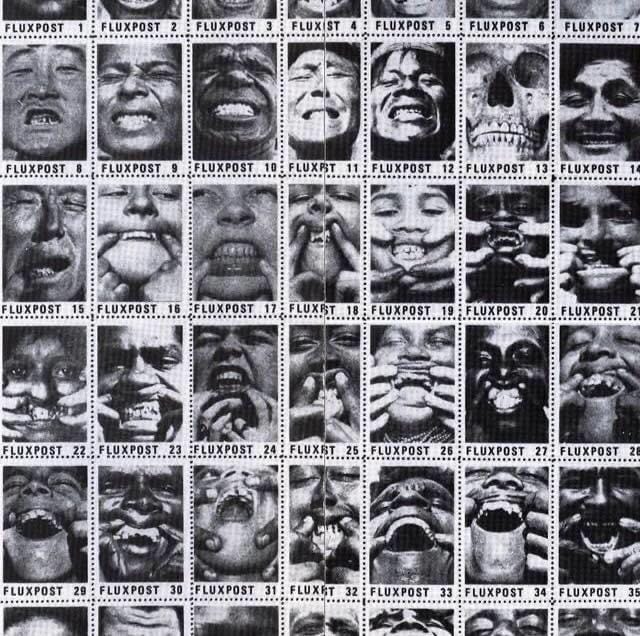
The Potency of the Missive
In stark contrast to the hollow instant-gratification of a text exchange, there’s a very specific joy in finding a physical missive in the mailbox. In a digital chat, you can often see the “typing...” bubble; in the mail, there is only mystery and silence until the sweet moment of arrival. Physical mail is a priceless gift.
There’s an incredible effort involved here: someone, halfway around the world, went to great lengths to write specifically to you. We often say things in letters that we might never say in person. As this relay begins, we’re not just moving paper; we’re testing whether a decentralized story can survive the friction of the real world.
Let the latency begin!
💌 💌 💌
Resist!!!! And CONNECT! Circulation is the key to happiness.... Ha!